Tucked away beyond the busy Paro corridor lies Haa Valley — a place Bhutanese often describe as pure, untouched, and deeply traditional. It is a valley where rituals are still practiced for the valley itself, not for visitors; where festivals are woven into agricultural cycles, local deities, and community memory.
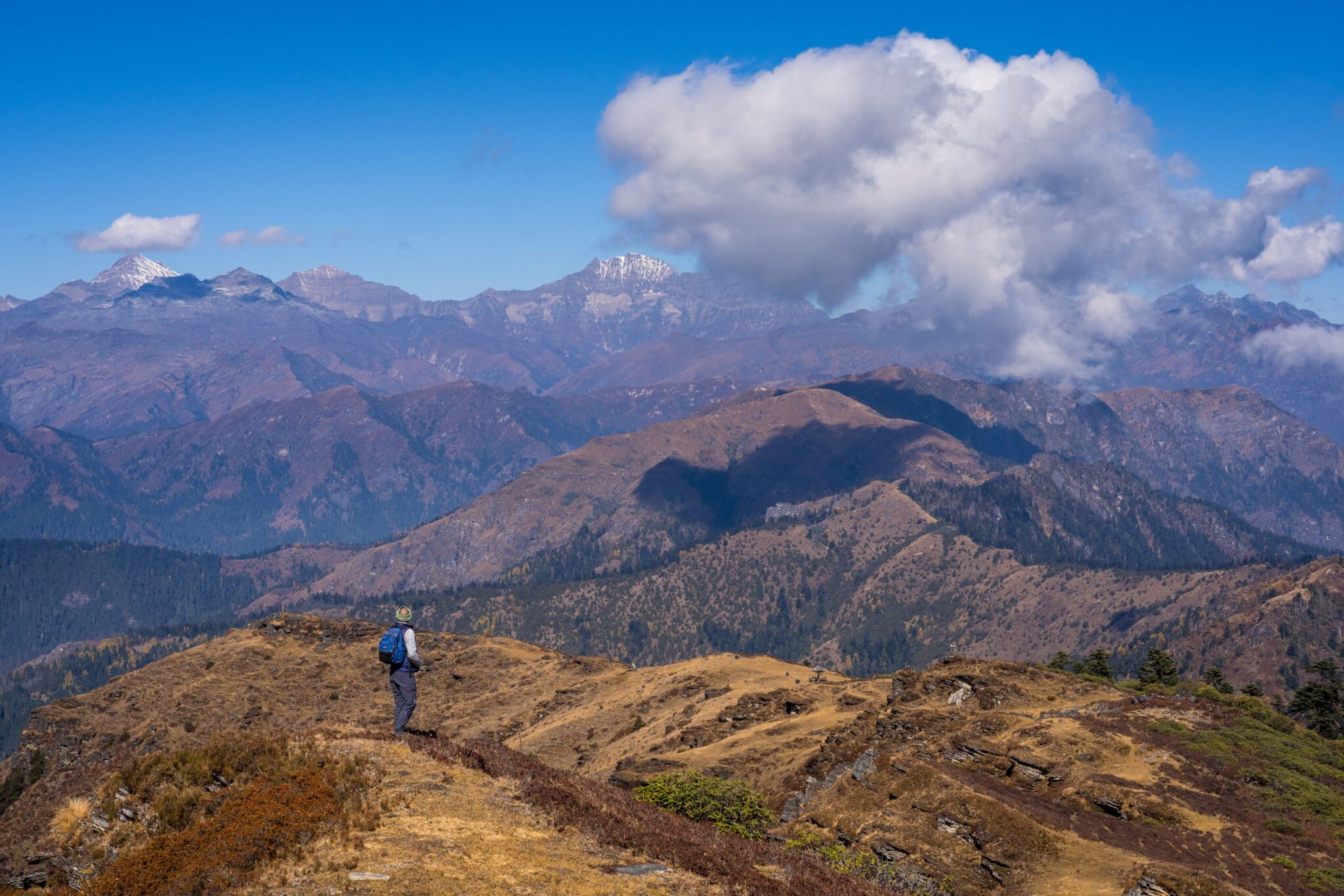
Haa is also renowned for its rich nature and biodiversity. Encircled by pristine pine forests, alpine meadows, rhododendron groves, and dramatic Himalayan peaks (including views toward sacred Meri Puensum and distant giants like Jhomolhari), the valley supports diverse wildlife—from elusive red pandas and Himalayan monal to various bird species and endangered flora. Its high-altitude terrain, crisp air, and minimal development make it a paradise for nature lovers seeking quiet immersion.
As a matter of fact, Haa is one of the best spots for fly fishing trout in Bhutan. The Haa Chhu (Haa River) and its clear, cold streams are celebrated for abundant wild brown trout (introduced in the 1930s and thriving here), along with occasional rainbow and snow trout. Anglers praise the pristine, low-pressure waters for catch-and-release experiences amid stunning alpine scenery—often hailed as a top trout destination in the kingdom, with prime seasons in spring (April–May) and fall (September–October), avoiding spawning closures and monsoons.
Unlike Bhutan’s well-known Tsechus (Cultural Festivals), Haa’s festivals stay low-key, intimate, and profoundly local. For 2026, five such festivals offer rare windows into the spiritual and cultural life of this western Himalayan valley.
While attending one of these festivals, you can also choose to pick one or two of these nature trails in Haa—pairing cultural depth with gentle (or challenging) immersion in the valley’s biodiversity. Breathe Bhutan highlights these trails on their site (breathebhutan.com), emphasizing sustainable, mindful exploration:
- Haa Panorama Trail — An 18.4 km full-day hike (about 8 hours) starting from Yangthang Lhakhang (2,893m), reaching up to 3,106m. It offers sweeping views of Haa Valley, sacred Meri Puensum peaks, distant Himalayas, and pristine pine forests. Ideal for panoramic immersion.
- Sagala Trek (Haa Planters’ Trail) — A beautiful 3-day hike dividing Haa and Paro valleys. It follows an ancient route used by rice planters, climbing through yak herder camps, rhododendrons, meadows, and high ridges (up to 4,100m) with valley vistas. Ends near Chele La Pass.
- Meri Puensum Nature Trail — A challenging full-day option (often 9+ hours) across holy peaks symbolizing Buddha’s forms (past, present, future). Features yak pastures, streams, wildflowers, birds, and wide valley overlooks.
- Trans Bhutan Trail (Haa Section) — Start in Haa (e.g., Kasho village) for segments of this revived 403 km ancient route. The initial leg crosses to Paro Valley through forests and ridges—moderate to difficult, with potential red panda sightings.
These trails suit various levels—some doable as day hikes, others multi-day—while prioritizing eco-conscious exploration.
Breathe Bhutan often customizes them for mindful travelers, blending nature with cultural stops.
Note: Fly fishing can also complement a Haa visit—arrange through licensed operators like Breathe Bhutan for guided, catch-and-release sessions on the Haa River, adding another layer of serene connection to the valley’s waters.
Here are the “Five Off-Beat Festivals of Haa: Inside One of Bhutan’s Least-Visited Valleys”.
1. Haa Spring Festival
Yangthang Ground | 7–9 April 2026
Timed with spring’s arrival, this festival celebrates renewal, pastoral life, and Haa’s nomadic heritage. Communities showcase yak herding, dairy traditions, weaving, archery, khuru (dart throwing), and other traditional sports. Performances feel grounded and community-driven, highlighting seasonal rhythms and vanishing skills.
It’s a lived celebration—food, labor, and valley pride—perfect for those wanting to witness authentic highland culture, perhaps followed by a relaxed afternoon on the Haa Panorama Trail.
2. Haa Annual Tshechu
Lhakhang Karpo | 19–21 October 2026
Haa’s main religious Tshechu centers on the sacred Lhakhang Karpo temple, honoring Guru Rinpoche with masked cham dances, rituals, and blessings. Its intimacy stands out: small crowds, no commercial stalls, and locals in finest gho and kira bringing offerings and picnics.
For a Tshechu without the bustle of Paro or Thimphu, this offers genuine Bhutanese devotion as everyday practice—ideal timing for a post-festival Sagala Trek segment.
3. Ap Chundu Lhasel
Jangkakha | 1 November 2026
A deeply spiritual ritual honoring Ap Chundu, Haa’s powerful guardian deity (predating Buddhism and blending Bon elements). Ceremonies, offerings, and a ceremonial procession (chipdrel) seek protection and harmony for the valley.
This understated event reflects Bhutan’s layered beliefs—local deities coexisting with Buddhism. Not tourist-oriented, its authenticity makes it profoundly meaningful, with time for a quiet nature walk afterward.
4. Rongtse Nye Tshechu
Rongtse Nye, Sangbaykha Dungkhag | 19 November 2026
In remote Sangbaykha, this Tshechu ties to the sacred Rongtse Nye site. It combines monastic rituals, dances, and blessings with community gatherings for isolated highland residents.
Access requires intention, but it reveals Bhutan’s unseen remote life—faith sustaining continuity in rugged terrain, perhaps paired with a short local trail exploration.
5. Rongtse Nye Festival
Sangbaykha Dungkhag Ground | 20–21 November 2026
A community-focused follow-up to the Tshechu, this celebrates pastoral life, self-sufficiency, and regional identity through cultural performances, games, livestock showcases, and agricultural displays.
Modest and resident-driven, it supports rural livelihoods while preserving traditions—embodying adaptive resilience, with opportunities for nearby nature immersion.
Why Haa’s Festivals and Trails Matter?
Haa’s events and paths aren’t staged—they sustain community, spirituality, and the environment. In a kingdom guided by Gross National Happiness, Haa quietly embodies it: well-being through season, ritual, and nature.
For mindful travelers, expect authentic immersion, spiritual depth, minimal crowds, and real connections. Pair a festival visit with a trail (or even a fly fishing session on the renowned Haa River) for the full essence.
If this calls to you, Breathe Bhutan crafts personalized journeys here—off-the-beaten-path, people-centered, and true to Bhutan’s spirit. Tashi Delek!