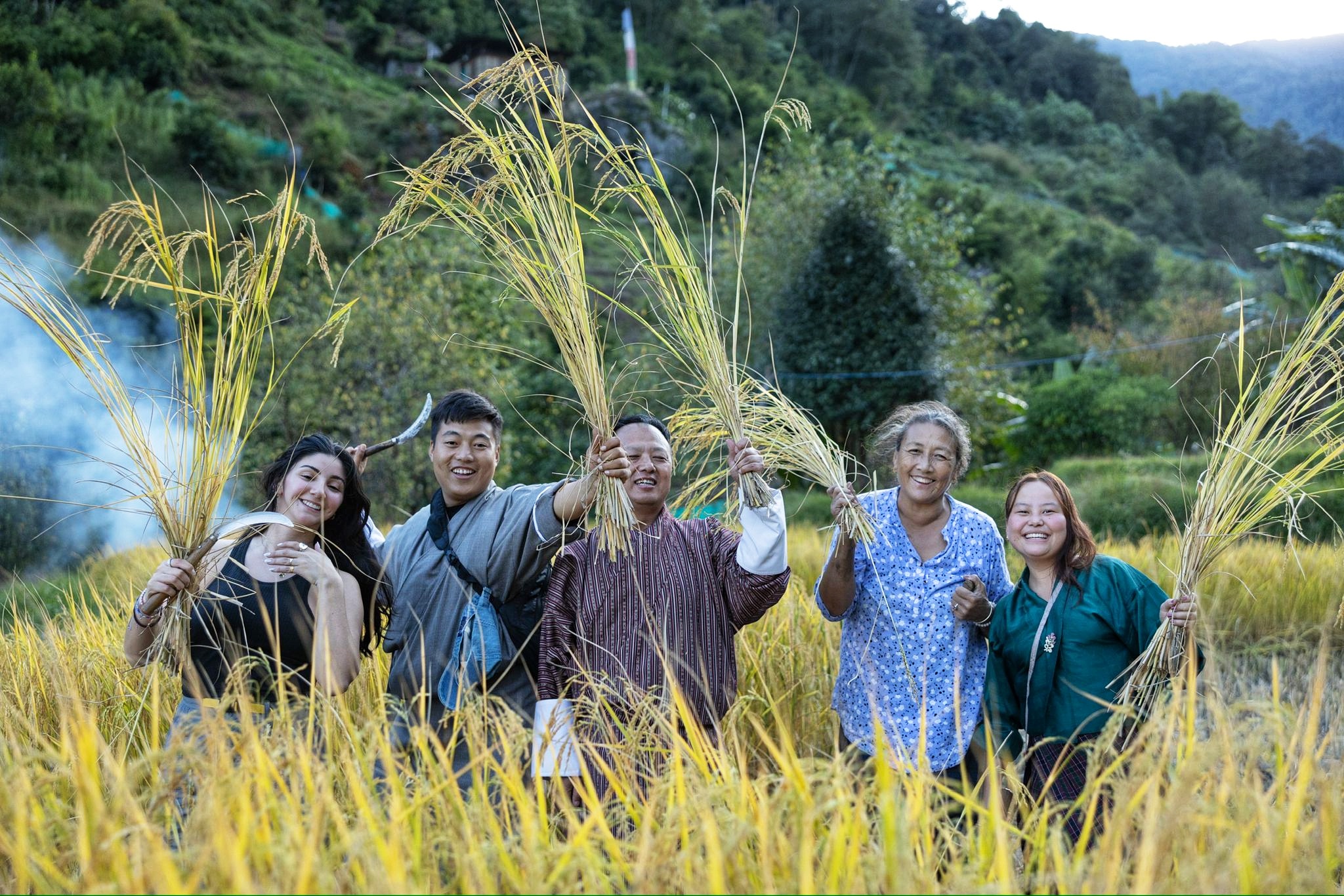
A Perspective on Traveling in Bhutan
As you prepare for your journey, we would like to share a perspective that may help you experience Bhutan in a deeper and more meaningful way. Bhutan is not defined by conventional luxury or first-world infrastructure; instead, it offers something far more enduring—authenticity, simplicity, and a way of life deeply shaped by Buddhist values.
In Buddhism, much of our dissatisfaction comes not from what is, but from what we expect things to be. When expectations are softened, even the simplest moments bring joy. You may find that things move at a different pace, weather can be unpredictable, plans may shift, or treks may need to be shortened for safety. Even in carefully selected hotels, human lapses can occasionally occur.
The difference in how a trip is experienced is rarely in what Bhutan offers, but in how it is received. Our team genuinely cares and works with sincerity to ensure your comfort and well-being. We invite you to arrive with openness, flexibility, and curiosity—allowing Bhutan to be what it is, rather than what it is compared to.
1. Important Requirements Before Flying into Bhutan (Transit Visas & Forms)
If your flights to Bhutan transit through neighboring countries, please review these mandatory travel requirements prior to departure:
- Transiting via India:
- A tourist or transit visa is required for most nationalities.
- All foreign nationals (including e-Visa holders) flying to India must complete the mandatory digital e-Arrival Card before travel, as paper arrival cards are phased out. Form link: Indian e-Arrival Card.
- Transiting via Thailand: All foreign travelers entering Thailand must complete the Thailand Digital Arrival Card (TDAC) within 72 hours before arrival. Form link: Thailand TDAC.
- Transiting via Nepal (Kathmandu):
- Visa on arrival is available at Kathmandu Airport, but long queues are common. Applying online in advance is strongly recommended.
- Important Notice for Indian Citizens: Indian nationals flying from Kathmandu to a third country (such as Bhutan or Thailand) are required by the Government of India to obtain a No Objection Certificate (NOC) from the Embassy of India in Kathmandu prior to departure. Passengers without a valid NOC may be denied boarding.
- Passport Validity: Bhutan requires at least one blank page in your passport for immigration entry/exit stamps. Ensure you have additional blank pages if you are transiting through other countries.
2. Flights, Baggage & Visa Clearance
- Visa & Air Ticket Delivery: Digital copies of your Bhutan Visa clearance and airline e-tickets will be emailed to you one month before your travel date. Processing them at this window allows us to handle any itinerary adjustments without incurring early cancellation fees or extra visa re-processing charges. Please print physical copies to present at airport check-in counters.
- Airport Check-In Timing: Please report to the check-in counter 2 to 3 hours prior to departure for all flights flying into and out of Bhutan. Always reconfirm your flight details the night before.
- Checked & Cabin Baggage Allowances:
- Drukair: Economy Class gets 30 kg checked baggage + 5 kg hand baggage. Business Class gets 40 kg checked baggage + 7 kg hand baggage.
- Bhutan Airlines: Economy Class gets 30 kg checked baggage + 5 kg hand baggage. Business Class gets 40 kg checked baggage + 7 kg hand baggage.
- Prohibited Items: Personal mobility devices, lithium batteries, compressed gases, flammable substances, explosives, matches/lighters, and e-cigarettes are strictly forbidden in checked baggage.
- Window Seat Requests & Default Check-In:
- Flying into Paro: Himalayan peak views are visible from the left side of the aircraft.
- Flying out of Paro: The best mountain views are from the right side of the aircraft.
- Breathe Bhutan Service: We automatically handle online check-in for you 72 hours prior to flight departure to request your preferred window seat (subject to airline availability). Please remind your guide 72 hours before your return flight as well.
- Note: Drukair charges a USD 15 seat selection fee per ticket for flight routes originating from or heading to Kathmandu and Delhi.
3. Arrival, Dining Freedom & Local Currency
- Airport Pick-Up: Your dedicated Breathe Bhutan guide and driver will meet you outside the Paro International Airport arrival terminal holding a personalized name sign and will assist you throughout your stay.
- All-Inclusive Meals & Dining Flexibility: All standard daily meals are included. While your guide will arrange quality scheduled dining, you have full freedom to enjoy “on-your-own” dining in major towns like Thimphu and Paro. If you see a local restaurant that catches your eye, let your guide know; they will handle table reservations and payments directly using your allocated meal budget.
- Currency & Expenses:
- The local currency is the Bhutanese Ngultrum (Nu.), pegged 1:1 with the Indian Rupee (INR). Indian Rupees up to INR 500 notes are widely accepted.
- Personal expenses include alcoholic drinks, soft drinks, shopping, laundry, and tips.
- Exchanging Cash & Banking Issues:
- Foreign cards frequently fail at Bhutanese ATMs due to international security blocks. Contact your home bank prior to travel to authorize transactions in Bhutan.
- Bring cash in USD or Euros. To avoid waiting at banks, Breathe Bhutan can send equivalent local currency directly with your guide upon arrival. We can also exchange unused Ngultrum back to USD at the end of your trip.
- Alternatively, funds can be transferred via Credit Card, Wise, or PayPal at current daily bank exchange rates.
- Duty-Free Gold Purchasing: Tourists can purchase duty-free gold in US Dollars at official Duty-Free Shops in Thimphu or Phuntsholing.
- Tipping Culture: Tipping your guide and driver at the end of your tour is customary in Bhutan. While discretionary, placing gratuities inside a sealed envelope is the standard custom.
4. Packing, Clothing & Environmental Considerations
General Clothing & Layering
Topography and microclimates vary widely—Thimphu and high passes are chilly, while Punakha is warm. Pack layered clothing made of natural, breathable fabrics (cotton, wool, silk).
Religious Sites & Dzong Dress Code
Strict rules apply when entering fortresses (Dzongs), temples, and festivals:
- Tops: Shoulders and chest must be covered. Collarless shirts must have full long sleeves. Collared shirts may be short-sleeved.
- Bottoms: Full-length trousers/pants are required. Shorts are strictly forbidden. Dresses/skirts must cover the knees completely.
- Footwear: Flip-flops are prohibited. Wear comfortable walking shoes that are easy to remove before entering temple interiors.
- Headwear: Remove hats, caps, and sunglasses before entering religious precincts.
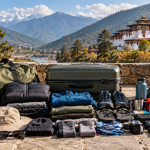
Essential Gear & Items to Pack
- Small Daypack & Document Pouch: For daily essentials, travel documents, cash, and passports.
- Eyewear: If you wear contact lenses, bring glasses as well—high altitude, wind, and dust can cause severe eye irritation.
- Sleep Protection: Stray dogs in towns sleep during the day and bark in packs at night. Earplugs are strongly recommended for light sleepers.
- Personal Medical Kit: Sunscreen, lip balm, insect repellent, hand cream, aspirin, anti-diarrheal pills, antiseptic cream, motion sickness remedies, and personal prescriptions (e.g., asthma medication).
- Power & Electronics: Voltage is 230V, 50Hz using Type C and Type D round-pin sockets. Cold weather drains camera/phone batteries rapidly; bring reliable power banks and extra camera batteries. Universal adapters can also be purchased in Thimphu hardware shops.
- Rain Gear: A lightweight poncho, rain jacket, or umbrella (especially June–September).
5. Wilderness Trekking & Bumdra Camping Prep
- Overnight Backpack: Vehicle luggage cannot reach off-grid mountain campsites. Bring a 25–35L daypack to carry a change of clothes, thermal layers, and overnight gear. Use Ziploc bags inside your pack to keep clothes dry.
- Camp Conditions & Warmth: Sites like Bumdra (~3,800m) lack electricity and tent heating. Pack thermal underwear, fleece/down jackets, warm beanies, and gloves. Sleeping bags and foam mattresses are provided by Breathe Bhutan, though you are welcome to bring your own sleeping bag.
- Lighting: A reliable flashlight or headlamp with spare batteries is required for navigating the camp at night.
- Footwear: Broken-in trekking boots with plenty of woolen socks (wool dries faster than cotton).
- Altitude Sickness: Altitude symptoms (headache, insomnia, mild nausea) affect fewer than 2% of travelers and typically pass after one night. If symptoms persist while trekking, lower elevation descent protocols are initiated. You may bring altitude medications from your home country.
6. Local Etiquette, Photography & Regulations
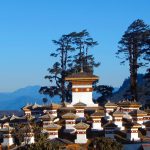
- Monastery & Cultural Conduct: Always walk clockwise around Chortens (stupas) and Mani (prayer) walls. If a prayer flagpole has fallen on the path, walk around it rather than stepping over it.
- Alms & Children: Giving alms to holy men outside temples is a respected practice—ask your guide for appropriate amounts. Do not give sweets, pens, or money to village children, as this encourages begging habits and is discouraged by local schools.
- Photography Rules:
- Always ask permission before photographing local residents.
- Photography is permitted in outdoor courtyards, but strictly prohibited inside temple chapels and shrine rooms.
- At religious festivals (Tshechus), never step onto the sacred dance ground for photos.
- Drone Laws: Flying recreational drones is strictly illegal in Bhutan. Unapproved drones will be confiscated at customs or seized by authorities, resulting in severe penalties for both traveler and tour operator.
- Customs, Tobacco & Alcohol Restrictions:
- Duty-free allowance: 1 liter of alcohol.
- Visitors can import up to 200 cigarette sticks subject to a 200% import tax. Smoking in public places, hotel interiors, and religious sites is prohibited.
- Shopping & Antiques Warning:
- Antiques cannot be exported from Bhutan under any circumstances. Exercise extreme caution when buying old religious artifacts or crafts without an official clearance certificate.
- Be aware that many art shops display half-finished Thangkas but sell mass-produced canvas prints from Nepal, or sell factory items from Delhi. Consult your guide or Breathe Bhutan before making major souvenir purchases to ensure authenticity and fair pricing.
7. Quick Practical Facts
- Country Calling Code: +975
- Time Zone: GMT/UTC +6 hours (single time zone nationwide).
- Language & Helpful Phrases: Dzongkha is the national language, but English is the medium of instruction in schools and widely spoken across the country.
- Hello: Kuzu-zangpo La
- Thank you: Kadrinche
- Goodbye / Good luck: Tashi Deley
- Yes: Las / Ing
- No: Men / Mae
- Tourist SIM Cards: Local tourist SIM cards (TashiCell or B-Mobile) cost ~$4–$6 and can be activated at Paro Airport upon arrival using a copy of your passport.