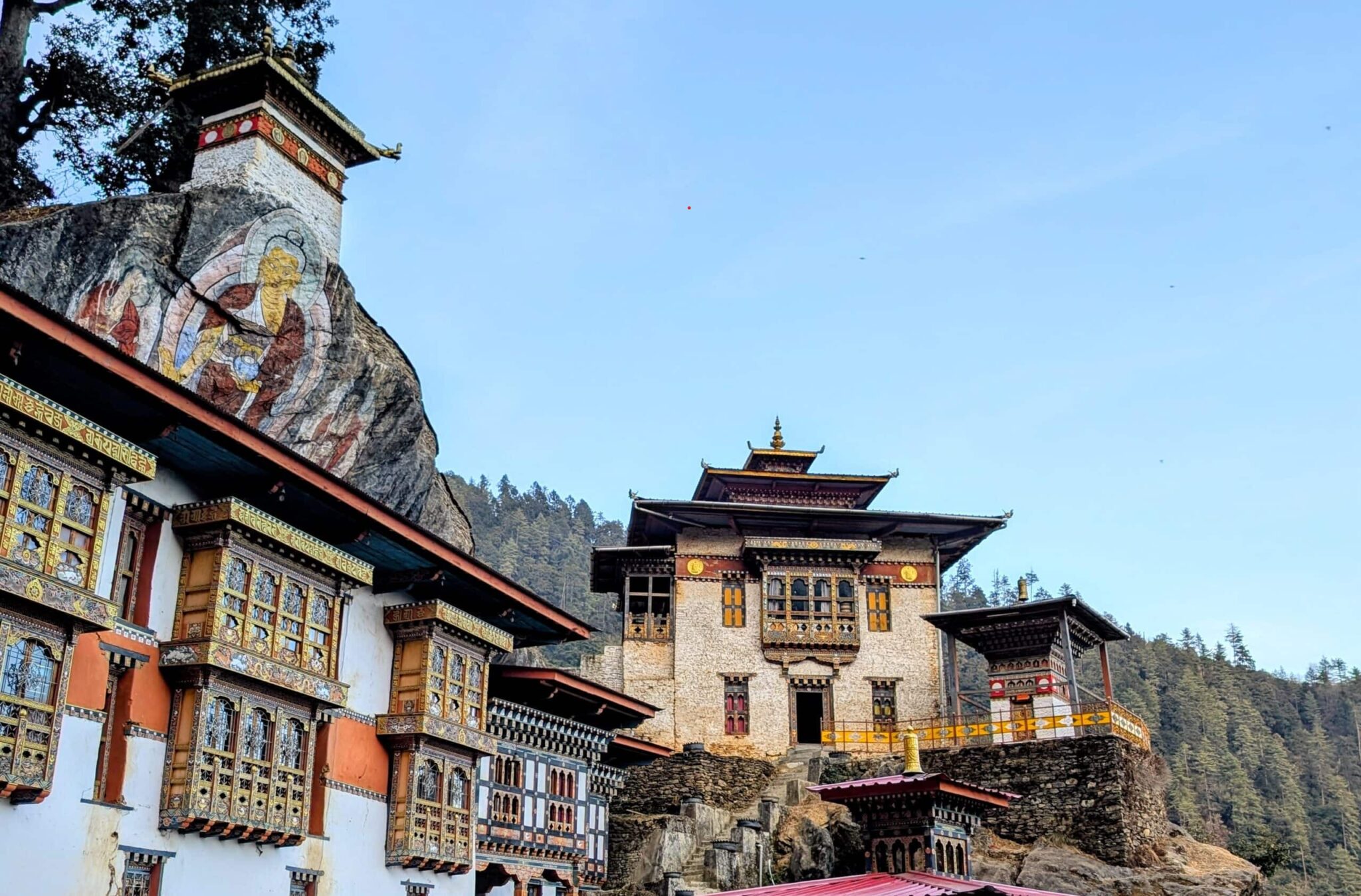
Visiting Bhutan is often described as stepping into a different world—a place where ancient traditions and spiritual wisdom are woven into daily life. One of the most profound ways to immerse yourself in this unique culture is by spending a night or two at a monastery. Far more than accommodation, it’s a chance to step away from modern distractions, connect with inner stillness, and experience the rhythm of monastic life.
What To Expect From a Monastery Stay?
Simple, Humble Accommodations:
Monastery stays are not about luxury. Rooms are clean, modest, and often shared or very basic—sometimes just a mattress on the floor with minimal furniture. Bathrooms may be communal, and hot water limited. Yet the simplicity is intentional, encouraging guests to focus on the experience of mindfulness rather than material comforts.
Daily Rhythms of Monastic Life:
Your day will likely begin at dawn with the deep, resonant sounds of chanting and horns echoing across the mountains. Expect:
- Morning prayers with the monks.
- Shared vegetarian meals eaten in silence.
- Opportunities for meditation and self-reflection.
- Occasional lessons on Buddhist philosophy, astrology, or even English—depending on the monastery.
- Evenings usually end with prayers or meditation, wrapping up a day lived with purpose and discipline.
Immersion in Spiritual Practice:
Being in the monastery allows you to observe (and sometimes join) sacred rituals, learn from a resident lama, and embrace the quiet mindfulness that Bhutan is known for. This immersion creates a space for introspection, calm, and connection to something larger than yourself.
Important Things To Know
- Not every monastery will be open to hosting guests. Access is limited, and some monasteries are not equipped or permitted to accommodate visitors.
- Some monasteries have guest houses where travelers can stay, offering a more comfortable yet still simple experience.
- All monasteries will not allow guests, especially couples, to stay inside the main temple or monastery itself. Respect for sacred spaces is a must.
- Food will be very simple—typically vegetarian, modestly prepared, and sometimes repetitive. You’ll need to be flexible and able to handle this simplicity with grace.
Will Monasteries Charge You?
Some monasteries may host you for free, but it is customary and respectful to make a donation or honorarium to support the monks and upkeep of the institution. Monasteries with proper guest houses will usually charge based on the room type, and this money goes directly toward the sustainability of the monastery.
Do I have to pay the Sustainable Development Fee (SDF) when I stay at a monastery?
Yes. Regardless of where you stay—whether it’s a hotel, farmstay, or monastery—the SDF must be paid in order to obtain a visa. The SDF is a mandatory fee for all international travelers to Bhutan.
Frequently Asked Questions
1. How long should I stay at a monastery? Most travelers choose one or two nights, which is enough to experience the rhythm of monastic life without being overwhelming. Longer retreats can sometimes be arranged with prior approval.
2. Can couples or families stay together? Couples will not be allowed to stay in the main monastery. If guest houses are available, couples or families may share rooms there, but always expect separate arrangements if staying within monastery grounds.
3. Do I need to be Buddhist to stay? No. Stays are open to people of all faiths and backgrounds. What matters is your respect, openness, and willingness to adapt to monastic customs.
4. Can I take photos inside the monastery? Photography is often restricted inside temples and during rituals. Always ask permission before taking pictures. Outside, in courtyards or landscapes, it’s usually fine.
5. Will monks speak English? Many monks, especially in larger monasteries, speak some English, and younger monks may be surprisingly fluent. However, conversations will be simple—don’t expect deep philosophical exchanges unless arranged through a guide or lama.
6. Is it safe to stay at a monastery? Yes. Bhutan is one of the safest countries in the world, and monasteries are peaceful places. That said, accommodations are very simple, so do not expect hotel-style security or staff.
7. Can I join the monks in prayers or meditation? Often yes, but participation is at the discretion of the monastery. Guests are welcome to observe quietly, and sometimes invited to join morning or evening chanting sessions.
8. Is alcohol or smoking allowed? No. Monasteries are sacred spaces and strictly prohibit alcohol, smoking, and other intoxicants.
9. What happens if I have dietary restrictions? Meals are vegetarian and simple. If you have allergies or medical restrictions, let your guide know in advance. Monasteries cannot always accommodate special requests, so be prepared.
10. Can I use my phone or laptop? It’s best to switch it off. Some monasteries may not have electricity or Wi-Fi, and using gadgets openly would disturb the atmosphere. Treat this as an opportunity to disconnect.
11. What is the best season for a monastery stay? Spring (March–May) and autumn (September–November) offer pleasant weather and clear skies. Winters can be cold in mountain monasteries, and monsoons (June–August) make travel less comfortable.
12. How do I arrange a stay? You cannot usually just walk into a monastery and ask. It must be pre-arranged through a licensed Bhutanese tour operator (such as Breathe Bhutan) who has connections and permissions.
13. Will I get a private room? Sometimes, if the monastery has space or a guest house. But be prepared for very basic or shared arrangements—it’s part of the authentic experience.
Get in touch with Breathe Bhutan and we will fix a night or two at a monastery in Bhutan.