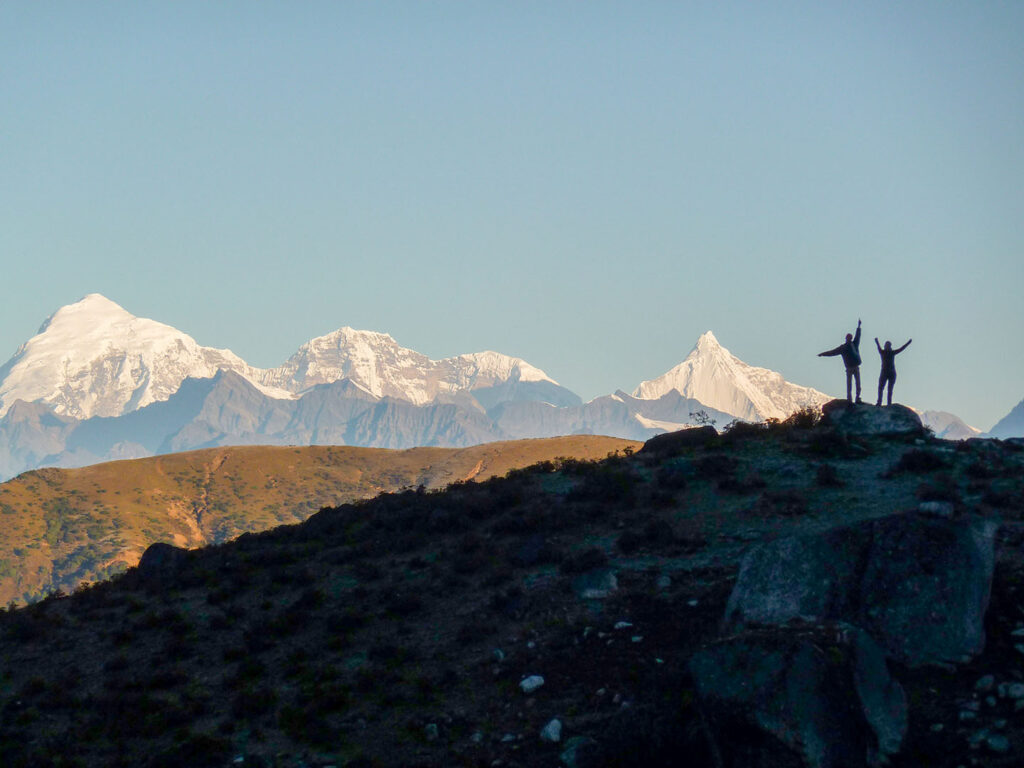
The Brigdungla Trek: Unearthing Bhutan’s Lost Trail in the Highlands of Bumthang
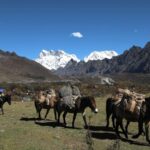
Forget the crowds—there is a corner of Bhutan where the only paths worn are by ancient yaks and the occasional nomadic herder. This is the Lost Trail of Brigdungla, a magnificent 5-day trek recently revived in the high mountains of Bumthang, offering vistas similar to the famous Snowman Trek but in a shorter, more accessible package.
If you dream of 360-degree Himalayan views, vast moors dotted with dozens of sacred lakes, and an intimate glimpse into Bhutanese highland life, the Brigdungla Trail is your next great adventure.
Trek Overview
- Duration: 5 Days / 4 Nights (Trekking only)
- Difficulty: Moderate to Hard (due to high altitude)
- Highest Point: Approx. 4,600 meters (15,091 ft)
- Best Seasons: Spring (March, April, May) and Autumn (September, October, November)
The 5-Day Brigdungla Trek Itinerary
This itinerary includes an extra day near the highest point, ensuring you have ample time for rest and exploration while fully soaking in the breathtaking views of Mount Phola and the surrounding landscape.
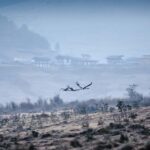
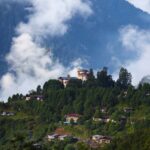
The journey begins at Zhurey Village, a charming settlement 28 km from Chamkhar town. After a brief village tour, you’ll begin your ascent under the cooling canopy of Chir Pine forests. The path is a gradual, steady climb that takes you through untouched nature, leaving the valley floor behind. The day culminates at Pongchhen Camp, your first night in the high mountains.
Time/Altitude: Approx. 7 hours; Ascent to 4,050 m (13,287 ft).
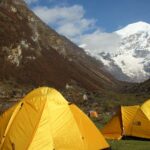
Today is where the landscape truly opens up. The path climbs above the treeline, transitioning from dense forest to wide-open pastures and high mountain views. You will catch your first sight of the legendary highland lakes and the majestic Mount Phola, which dominates the landscape. The reward for your efforts is reaching Tsemchi Campsite, the highest point on the main trail, where you’ll have unparalleled views.
Time/Altitude: Approx. 4 hours; Ascent to 4,500 m (14,763 ft).
This is your well-deserved Rest and Exploration Day at the rooftop of the trail. Take the time to simply enjoy the views and the quiet of the highlands. Use the day to explore the surrounding area, said to be scattered with 108 sacred lakes. This is a day for slow hiking, photography, and keeping an eye out for yaks grazing the expansive moors. The 360-degree panorama of the Himalayas from this spot is unforgettable.
Time/Altitude: Exploration day; Stay at 4,500 m (14,763 ft).
After saying goodbye to Mount Phola, you begin a beautiful descent. The path takes you through more open meadows where you are likely to spot nomadic shelters. The four-hour descent brings you back towards the treeline, stopping at the quaint Wongbu Camp. Look out for the famous log cabin on the mountain top, originally built by the residents of Bim Village.
Time/Altitude: Approx. 4-hour descent; Wongbu Camp at 4,090 m (13,418 ft).
The final stretch of the trail is a long, rewarding descent back to civilization. You will hike through beautiful rhododendron shrubs and thick pine forests. This is often the most cultural part of the trek, as you may stop for tea and conversation with local yak herding families. The trek concludes as you arrive at Bim Village, taking with you memories of Bhutan’s truly wild and hidden heart.
Time/Altitude: 5-6 Hrs; Descent to lower elevation.
Trekking Rates For Bhutan
The Department Of Tourism requires that a minimum standard needs to be maintained while trekking in Bhutan, so as to provide a premium trekking experience to nature lovers. You will be accompanied by your own trekking team consisting of a professional trekking guide, certified and experienced cook, camp assistant and one or two horsemen (depending of the group size) and several horses; regardless of whether you’re a solo trekker or you are a part of a bigger group. All food supplies must be carried along will be prepared hot and fresh at the campsites. Trekking in Bhutan can therefore be expensive for solo travelers and those traveling in smaller groups.
TREKKING SURCHAGE PER PERSON ON TOP SDF, GUIDE & VEHICLE CHARGES
1 Pax
USD 300 Per Person Per Day
2 Pax
USD 200 Per Person Per Day
3 Pax
USD 180 Per Person Per Day
4 Pax or More
USD 160 Per Person Per Day
A TYPICAL DAY ON THE TREK
The day starts off with a wake up call, around 6-6:30 am, if you are not already awake by then. A staff will come with a bowl of warm water to wash up along with tea/coffee brought to your tent. Before heading over to the dinning tent for breakfast, usually around 7-8, we suggest you pack your overnight gear into your duffel bag and prepare for the day. During breakfast the staff will pack away the tents and ready the horses.
After breakfast, usually between 8:30-9 am, we start walking. The pace of the trek is leisurely with plenty of time to enjoy the scenery, take photos and explore the local settlements, if any. Lunch will be around noon at a favourable spot by the side of the trail. Lunch is carried by the staff.
There is usually more walking after lunch, we will always plan to cover big ascents/passes before lunch but this does not always pan out as expected. Normally we will get into camp by mid afternoon with the tents already set up by the support team. Once you arrive at camp, you will be able to wash up, change to get into your comfy camp clothes and try and get comfortable.
Tea and snacks will be served. Followed by dinner later in the evening around 7pm.
FOOD
All meals are freshly prepared by our cook and kitchen team. Breakfast with fried rice, toast/pancakes with various condiments, omelettes and a range of hot drinks. Hot lunch is prepared by the kitchen crew during breakfast and packed into containers carried by the staff to be eaten on the trail. On arrival at the campsite, there will be tea and other hot drinks in the dining tent with biscuits and snacks, help yourselves. Dinner will follow with soup, meal and dessert.
ACUTE MOUNTAIN SICKNESS (AMS)
This happens due to the body’s reaction to the low air pressure (less oxygen) at high altitudes and each individual responds to this situation differently. So please ascent at your own steady pace so that you allow your body to acclimate as you gain elevation.
This is a problem for some people, especially when hiking and sleeping above 3500 meters. The onset of symptoms has no logic in the sense that you never know who will get it regardless of your previous climbs and high ascents. There is no natural way to avoid getting AMS. However, acclimatization before the trek (we recommend day hikes, climbing high and sleeping low) and staying hydrated, eating and sleeping (rest) well on the trek goes a long to keeping yourself fit and feeling good.
Usually a steady and throbbing headache at the back of your head is a telltale sign of the onset of AMS. But this is not a major concern if it does not develop further and persists. Other symptoms include: fatigue, shortness of breathe, loss of appetite, difficulty sleeping and vomiting. There is no treatment to this sickness other than letting the body rest, acclimate and cure itself. If the symptoms do not get better, we will descend in altitude.
PACKING LIST AND TIPS
They say we pack our fears when we travel and thus all of us pack different and are each their own creatures of comfort. But the rule of thumb on treks is to keep it to the essentials and be organized.
Less things to pack in the morning means, being swift and at ease which translates to a few more cups of coffee while enjoying the morning sun.
Therefore only listing the essentials here.
THE ESSENTIALS
DAS BOOT: Your favourite hiking boot or shoe. One that is broken in and kept you on the trail, blister free, while hitting the gnarly stuff. A pair with good ankle support that breathes well and to a certain extent is water resistant, keeps your feet happy!
THE FART SACK: I mean the sleeping bag. Check where and when you are going and take something that is rated lower by 5ºC than the expected temperature, just be on the warmer and safer side. Women typical tend to sleep colder than men.
MATTRESS: A foldable and comfortable mat, ideally an inflatable mattress. After a long day, you just want some good sleep. One that can be packed away inside your duffle bag or secured on the outside with the straps (easier for us to stow away and load it onto the horses). We will provide a footprint foam mat.
DAY PACK: Just like your boots, a backpack is something you wear almost throughout the day and the entirety of your trek. So take a pack that you are comfortable with. A 20-30 L pack is ideal, depending on the gear you carrying.
CLOTHING: Apart from the clothes you are comfortable with, a rain jacket or a poncho that can double up as a windbreaker, is indispensable. Micro climates in the mountains are an enigma. So its always nice to be prepared, that way the rain doesn’t feel so bad and you can slog on with a grin on your face. Another essential is a down jacket, to throw over yourself while at camp after the sun goes down.
MEDICATION: Please don’t forget you personal medication. Also a small personal first aid kit. You may never need them, but it can prove to be crucial for your wellbeing incase you do while on the trail. We will also have a common first aid with only the essential medicine and kit.
HEADLAMPS/TORCH:
GLOVES & BEANIES
SUNSCREEN, SUN GLASSES AND HAT
WATER BOTTLES
A PACKABLE PILLOW