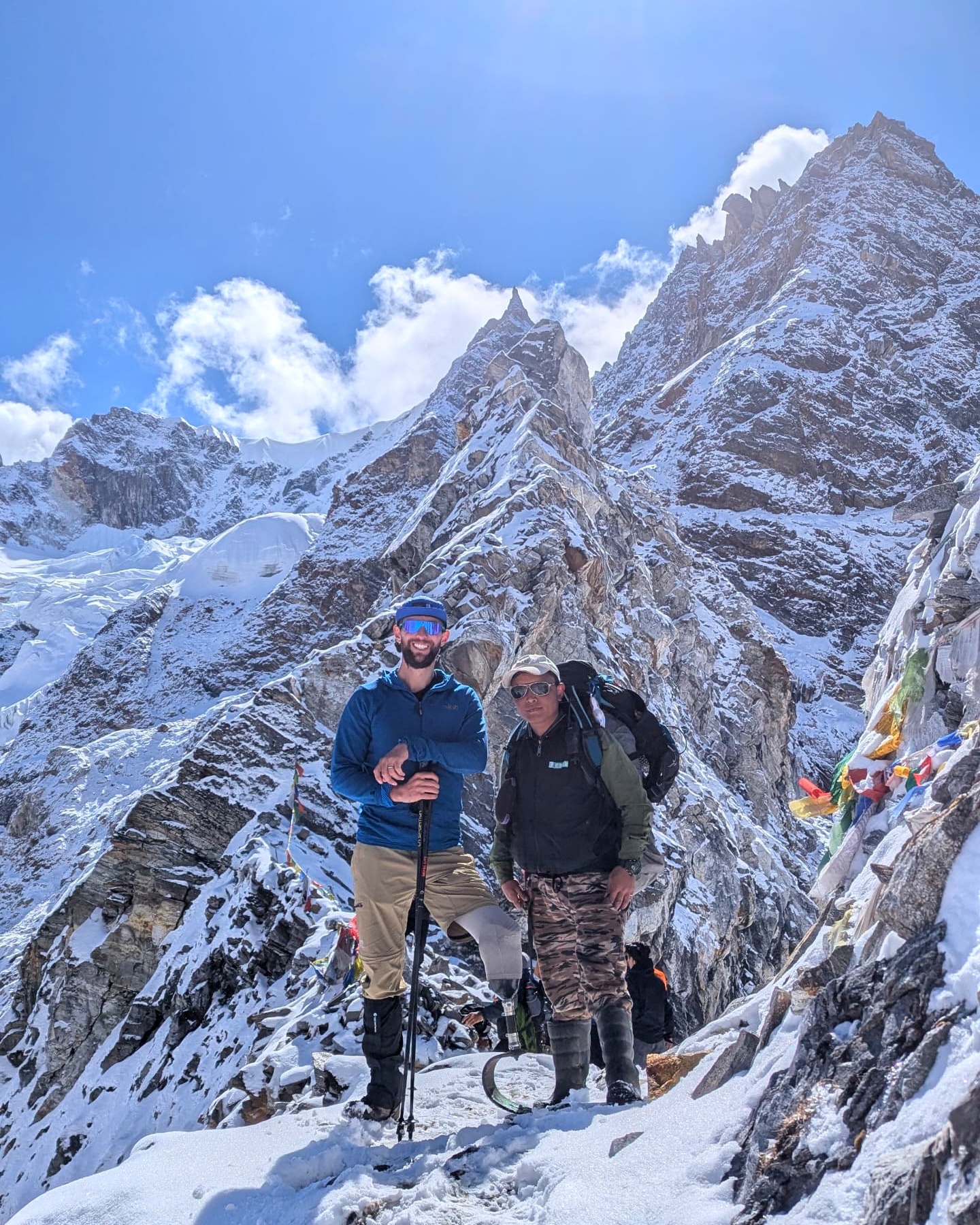
By Rich Potter (@amputee_rich)
The Himalayas don’t care who you are. Soldier, athlete, amputee—it makes no difference when the air thins, the blisters burn, and the mountains rise higher with every step. I had come to Bhutan with two prosthetic legs, a teammate, and a dream: to finish the Snowman Trek, the hardest trail on earth. My teammate had turned back days before, leaving me alone with two prosthetic legs, a guide named Pasa, and the toughest trek on earth. Somewhere in that storm, Bhutan asked me the only question that mattered: would I keep walking?
Arrival in Bhutan
By the time we landed in Bhutan, the weight of a year’s planning was pressing on my chest. Fundraising, logistics, sponsorship pitches—it all faded as the aircraft slipped between walls of mountains and dropped into Paro. The airport felt less like a checkpoint and more like a gateway: carved beams, painted dragons, and an unmistakable sense that the real journey was only just beginning. It looked like something from a Tolkien novel—part fortress, part fairytale—and the staff greeted us with a warmth so genuine it felt less like customs and more like coming home.
My teammate Richard Davies and I—both below-the-knee amputees—had joined forces to form the “Limbitless Expedition.” Our aim was bold: to become the first disabled people to complete the Snowman Trek, a 300-kilometre odyssey across some of the harshest terrain on the planet.
From the outset, Breathe Bhutan, the tour company we chose, filled us with confidence. They had the experience, professionalism, and local knowledge to give us the best possible shot. Our guide, Pasa, was waiting at arrivals—smiling, energetic, and unknowingly about to become the heartbeat of my journey.
That evening we tasted Bhutan’s unofficial national dish: green chillies and yak cheese. It was delicious, but the fiery aftershock reminded us we were far from home.
First Steps: Tiger’s Nest and Beyond
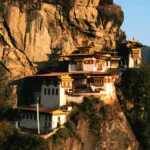
The following morning we trekked up to Tiger’s Nest Monastery, clinging impossibly to a cliffside. It’s the kind of view that etches itself into your brain forever. Locals and tourists alike stopped us for photos, stunned when we explained we were attempting the Snowman Trek. Their encouragement gave us an early boost.
Soon enough, comfort was behind us. At the trailhead we met the rest of our team: chef Kencho, horseman Pasa (yes, another Pasa), and porters Puba and Jigs. Our packs brimmed with prosthetic spares and medical supplies. From the first step, it was clear the trek would test us in ways we hadn’t imagined.
By nightfall, exhausted and blistered, we reached camp to the sound of horse bells and the promise of momos steaming by a nearby stream. It became clear that the rhythm of the trek would be simple: walk, endure, repair, repeat.
Into the High Passes
Altitude hit quickly. Sleep was scarce, food sometimes hard to keep down, and every climb felt endless. By Day 3 my stumps were blistering badly, each step a surge of pain. Yet the mountains offered their own rewards: snow-capped peaks, endless silence, and moments of wonder—like visiting a village school where children marvelled at our prosthetic legs.
The first 5,000-metre pass nearly broke me. Loose scree underfoot, lungs screaming, lactic acid burning—I watched mule trains float up the mountainside like ants while every step felt like a war. But at the summit, staring across jagged horizons, I knew we had entered a different world.
Meals became our anchor. Kencho’s campfire feasts—pancakes, roast chicken, even sugar-crusted cakes—kept spirits alive. Camp life also brought levity: Pasa carried a tiny Bluetooth speaker, and somehow 90s hip hop became our soundtrack. Nights ended with singalongs around the stove, laughter echoing through the thin air. Those moments — silly, warm, almost normal — made the hardship bearable.
Breaking Point in Laya
Reaching Laya on Day 11 was a milestone. For me it was a minimum goal; for Richard, it was the end. His residual limb had deteriorated beyond repair. After difficult discussions, he chose to evacuate.
Watching my teammate leave was brutal. We had never imagined finishing apart. That night, alone in my tent, doubt gnawed at me. Could I continue? Did I even want to?
It was Pasa who pulled me back. “Bro, you’re here for a reason. Let’s get this done,” he told me as a blizzard closed in. Snow swirled around us, and for a moment we just laughed—two tiny figures swallowed by white. That laughter became a turning point. I wasn’t just continuing; I was determined to finish.
Alone with the Mountains
From then on, the trek became survival. Blisters multiplied, my stomach rebelled, and sleep rarely came. Every day demanded absolute focus: eyes glued to the ground, scanning every step for hazards my prosthetic feet couldn’t forgive.
But Bhutan also revealed its magic. Red pandas darted through forests. Glacial lakes mirrored skies so clear it felt like stepping into another world. Prayer flags snapped in icy winds, sending their blessings into the thin air.
Encounters along the way added unexpected color. Trekkers and villagers stopped us constantly for photos, amazed by our attempt. Their encouragement lifted us when our own energy faltered. And one evening, we stumbled across a Bhutanese army contingent preparing for the Snowman Race — an ultramarathon across the same terrain we were inching over in weeks. They were stunned at my presence on the trail and treated me like an equal competitor. We swapped stories, laughed over our wildly different training methods, and even shared meals. Some of those soldiers still check in with me today on Instagram.
On Day 24 we stumbled upon a natural hot spring. For one night, pain melted away. Soaking in the steaming water, laughter bubbling from our exhausted crew, I felt a rare lightness. Hope, fragile but real, had returned.
The Last Push
The final days blurred into mud, snow, and silence. At times the trail swallowed us knee-deep, sapping energy I barely had. On Day 27, raw and limping, I thanked my crew in a shepherd’s hut. Though my name might go into the record books, their strength had carried me here.
And then, one morning, it was over. Pasa stopped, lifted his phone, and filmed. “Rich, you’ve just made history. You’ve completed the Snowman Trek. How do you feel?”
For months I had imagined this moment—tears, a victory speech, triumph. Instead there was only quiet disbelief. After so many false summits, I couldn’t trust it was real until we reached the monument. Only then did it sink in: I had finished.
Return and Reflection
Back in Bumthang, we celebrated like family—food, laughter, even karaoke until two in the morning. When I finally flew home, I carried more than a world record.
I had set out to prove what disabled people could achieve. I returned with something bigger: a love for Bhutan, a bond with Pasa and Kinley of Breathe Bhutan, and the knowledge that limits only exist where we choose to accept them.
I went chasing a record. What I found was a country that stole my heart.
In September 2024, Rich Potter (@amputee_rich) became the first disabled person in history to complete Bhutan’s Snowman Trek — a thirty-day, 300-kilometre journey through some of the world’s toughest terrain.