
10 Things Every Traveller Should Know Before Arriving
By Kinley Wangchuk | Breathe Bhutan
Bhutan is often described as the Land of Happiness. A mystical Himalayan kingdom of ancient monasteries, monks in red robes, pristine mountains, and people living in harmony with nature.
Much of that is true.
But there is another Bhutan that rarely makes it into travel brochures.
After more than a decade of welcoming and hosting travellers to my country, I have realised that some visitors arrive with expectations that have very little to do with reality.
I have also learned that running a travel business is not just about organising hotels, vehicles, guides, and itineraries. It is about understanding people, their expectations, and sometimes their emotions.
So here are ten assumptions, realities, and occasionally uncomfortable truths that I wish every visitor knew before arriving, for your benefit and wellbeing, and, I’ll admit, for our peace of mind.
I share them not to discourage anyone from visiting Bhutan, but because I genuinely believe that a little understanding can make your journey far more meaningful and enjoyable.
1. Bhutan Is a Mystical Kingdom of Monks and Monasteries
The Assumption: Bhutan is a peaceful kingdom where everyone is deeply spiritual, monks meditate in mountain monasteries, and life has remained unchanged for centuries.
The Reality: We are a living, breathing society, not a country frozen in time.
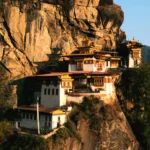
Yes, we have monks in red robes, ancient monasteries perched on cliffs, prayer flags fluttering in the wind, and centuries-old traditions.
But we also have young Bhutanese singing along to K-pop and banging their heads to Metallica at live music bars.
We have monks using smartphones, farmers watching YouTube, entrepreneurs building technology businesses, and young people dreaming of opportunities beyond our borders.
Our cities have traffic, construction, cafés, restaurants, bars, and all the everyday realities of modern life.
We are proud of our traditions, but we are not trying to live in the past.
The Harsh Truth: Bhutan is not a spiritual theme park created for tourists.
We are a country of real people living real lives, with the same aspirations, contradictions, and challenges as people anywhere else.
The young Bhutanese singing K-pop at a bar is just as authentically Bhutanese as the monk chanting prayers in a monastery.
Come to experience both.
2. Bhutan Is an Exclusive Destination, So Everything Must Be World-Class
The Assumption: Since Bhutan is an expensive destination, everything should meet the standards of Japan, Dubai, or Switzerland.
The Reality: Bhutan is a developing country, and we still have a long way to go.
Until recently, Bhutan was classified among the world’s least developed countries. We graduated from that classification in 2023.
I don’t know exactly what that change in terminology means to the average traveller, but I can assure you that our infrastructure and services did not transform overnight.
Bhutan is not Japan. It is not Dubai. And it is not Switzerland.
Our roads can be narrow and winding. Infrastructure is still developing. Service standards vary.
You might get a wonderful cup of coffee at one café and a terrible one at another.
Our bread might disappoint you too.
But remember, Bhutan is traditionally a rice-eating country. We didn’t grow up perfecting sourdough and croissants.
And if you order our traditional butter tea, don’t expect a delicate English breakfast tea or a strong caffeine fix.
It is buttery, salty, rich, and greasy.
That’s what it is supposed to be.
The Harsh Truth: If you expect everything in Bhutan to function like Japan, look like Dubai, or taste like Paris, you might want to reconsider whether Bhutan is the right destination for you.
Of course, this does not excuse poor service, unhygienic food, or broken promises.
But there is a difference between expecting good service and expecting an entire country to resemble somewhere else.
Please don’t travel halfway around the world only to complain that things are different from home. Isn’t that partly why we travel?
3. Bhutan Is the Land of Happiness, So Everyone Must Be Happy
The Assumption: Bhutanese people must be exceptionally happy, peaceful, and content with their lives.
The Reality: Gross National Happiness doesn’t mean everyone walks around smiling all day.
We have unemployment, financial difficulties, family problems, relationship issues, and all the ordinary challenges of modern life.
We get stressed. We get angry. We complain. We make mistakes.
Sometimes we are unhappy.
Just like everyone else.
Our philosophy of Gross National Happiness is an aspiration and an approach to development, not a declaration that every Bhutanese person has achieved eternal happiness.
The Harsh Truth: If you arrive expecting a perfect society filled with permanently smiling people, you will probably be disappointed.
Bhutan is not perfect, and we have never claimed to be.
Perhaps the more interesting story is how a small country like ours continues trying to balance economic development, cultural preservation, environmental conservation, and human wellbeing.
Happiness is something we aspire to create, not something we have magically achieved.
4. Your Guide Must Follow You Everywhere
The Assumption: Because Bhutan requires tourists to have guides, your guide must accompany you everywhere, all the time.
The Reality: Having a guide does not mean having someone constantly beside you.
There are places and activities where a licensed guide must accompany you.
But that doesn’t mean your guide needs to be your shadow.
In Thimphu and Paro, you can arrange time to explore independently.
Want to browse shops, sit in a café, enjoy a restaurant, or simply wander around town or want an afternoon or even an entire day to yourself? Discuss it with your guide or the tour operator.
Your guide remains assigned and available whenever needed.
And believe me, if you give your guide and driver a day off, they may be the happiest people in Bhutan!
You have already paid for their services. You can still ask them to drop you off somewhere and pick you up later.
Just communicate your plans.
Sometimes, tour operators become nervous when guests venture out independently. It is not necessarily because we want to restrict your freedom.
We are often genuinely concerned about your safety.
If you get scammed while shopping independently or get into an argument at a bar, those are examples of situations arising from personal choices outside the arrangements we organised.
You must take responsibility for those choices. We cannot guarantee what happens during activities you arrange independently, although we will certainly do our best to help if something goes wrong.
The Harsh Truth: Your guide is not your babysitter, but neither is your guide indifferent to your wellbeing.
When someone worries about where you are, it may simply be because they care.
We want you to experience Bhutan, not feel supervised while doing so.
5. Once Your Itinerary Is Confirmed, It’s Set In Stone
The Assumption: Once a Bhutan itinerary is finalised, you must follow it exactly as planned.
The Reality: You paid for it, you are the boss. Almost everything can be changed if you communicate early enough.
Not connecting well with your guide?
Tell us. We can arrange another guide.
Uncomfortable with your vehicle?
We can change it.
Don’t like your hotel?
We can explore alternatives.
Perhaps you thought you wanted luxury hotels but discovered that you would enjoy a quiet farmhouse more.
Perhaps you imagined an adventurous holiday but now prefer spending afternoons reading in a beautiful garden.
We can even redesign your entire itinerary.
Naturally, some changes depend on availability and may involve additional costs.
But there is often much more flexibility than travellers realise.
The Harsh Truth: Some guests remain unhappy for days without saying anything, only to express their disappointment on the final evening or after returning home.
By then, the opportunity to improve their experience has passed.
I would much rather receive a message on the second day saying something isn’t working than a long email after the journey explaining everything that went wrong.
Please don’t save your disappointments for a review. Give us an opportunity to make things right while you are still here.
We may not be able to fix everything, but we would certainly appreciate the chance to try.
6. The More Monasteries, Temples, and Dzongs You Visit, the Better Your Bhutan Experience
The Assumption: To experience Bhutan properly, you must visit as many monasteries, temples, and dzongs as possible.
The Reality: You can have too much of a good thing.
There is a saying among people working in Bhutan’s tourism industry:
“Don’t get Dzonged out!”
I have seen itineraries packed with monasteries, temples, and dzongs, sometimes several in a single day.
Visit one monastery in the morning, another temple after lunch, and yet another dzong before dinner.
Repeat the next day.
And the day after.
By the fourth day, everything begins to look the same.
You may struggle to remember which monastery was which, let alone the stories your guide shared.
My advice?
Unless you have a particular spiritual, religious, academic, or professional interest, one good monastery, one interesting temple, and one magnificent dzong may be enough.
Take your time. Understand what makes each special.
Then go and experience something else.
Visit a village. Have lunch with a local family. Explore a market. Take a walk through a forest. Enjoy a live music bar. Try some local food.
Bhutan has so much more to offer.
The Harsh Truth: Visiting twenty monasteries does not necessarily make your Bhutan experience ten times more meaningful than visiting two.
Sometimes, less really is more.
And please, don’t get Dzonged out!
7. If Google or AI Recommends It, It Must Be Worth Visiting
The Assumption: Google and AI tools like ChatGPT have access to so much information that their recommendations and itineraries must be reliable.
The Reality: Not everything you read online about Bhutan is accurate, current, or even real.
Please don’t blindly trust everything you find on Google or what AI tools tell you about Bhutan.
Much of the information available online is outdated, inaccurate, or simply copied from one website to another.
And AI can be particularly convincing because it presents information with such confidence, even when it is completely wrong.
I have received numerous AI-generated itineraries, and some of them are all over the place.
Places are arranged in impractical sequences. Driving times are unrealistic. Activities are suggested in the wrong seasons.
And, of course, every famous monastery, temple, and dzong somehow makes it into the itinerary!
Sometimes the itinerary looks beautiful on paper but makes absolutely no sense to someone who actually knows Bhutan.
AI can make a terrible itinerary sound like the journey of a lifetime.
I am not against technology. Far from it.
Use AI to discover Bhutan, explore possibilities, and understand what interests you.
Use Google to read reviews, look at photographs, and gather ideas.
But don’t treat everything you find as gospel.
The Harsh Truth: The internet is full of information about Bhutan. But information is not the same as knowledge, and knowledge is not the same as experience.
A beautifully written itinerary is not necessarily a well-designed journey.
Let AI inspire your trip. Let someone who actually knows Bhutan help you make it happen.
8. If You Are Unhappy, Something Must Be Wrong With The Itinerary
The Assumption: If you’re feeling unhappy or frustrated during your holiday, something must be wrong with the arrangements.
The Reality: Sometimes, the problem has nothing to do with the itinerary or the tour guide or the meals.
This may be the most uncomfortable truth of all.
Every traveller arrives carrying more than just luggage.
Some arrive exhausted from work. Some are dealing with personal problems. Others may be carrying worries they hoped to leave behind.
A couple may have had an argument that morning.
Someone may have received an unpleasant email from work just before breakfast.
A family may be dealing with tensions that have absolutely nothing to do with Bhutan.
And sometimes, these emotions spill over into the travel experience.
A guest who was cheerful yesterday may suddenly become withdrawn or irritable today.
Something that was perfectly acceptable yesterday may suddenly become a problem.
Unfortunately, our guides and drivers are often the first to face the consequences.
And when things escalate, the frustration eventually reaches us, the people running the business.
Sometimes, by the time a complaint reaches my desk, what began as a difficult morning has become a disappointment with the entire journey.
Our guides and drivers, too, are human.
They have families, personal worries, and difficult days of their own. Yet, they are expected to put all that aside and remain cheerful, patient, and professional.
Of course, tour operators make mistakes. We certainly do, and we must take responsibility when that happens.
You have every right to expect excellent service and to speak up when something is wrong.
But there is a difference between expressing disappointment and taking frustration out on someone.
The Harsh Truth: Sometimes, you are simply having a bad day.
And that’s perfectly okay.
But remember, the person looking after you may also be having a difficult day.
You can be firm without being unkind. You can raise concerns without raising your voice.
You may have paid for the holiday, but you haven’t purchased the right to disrespect another human being.
9. If the Weather Forecast Says Rain, Your Holiday Is Ruined
The Assumption: If Google or a weather app predicts heavy rain throughout your Bhutan holiday, you should expect terrible weather.
The Reality: Bhutan has numerous microclimates, and weather forecasts can be remarkably unreliable, particularly when predicting conditions in specific valleys.
I cannot tell you how many times guests have written to me before arriving in Bhutan, worried about the weather.
“Google says it’s raining heavily in Bhutan. Should we be concerned?”
I look out of my office window and see blue skies, sunshine, and perfectly pleasant weather.
Sometimes, I simply take a photograph and send it to them.
“Well, this is what Bhutan looks like right now!”
Bhutan may be a small country, but its geography is incredibly diverse.
It can be raining in one valley and sunny in another, just a short drive away.
A forecast showing rain for Thimphu doesn’t necessarily mean it will rain throughout the day, let alone across the entire country.
And even when it rains, it may be a short afternoon shower rather than the continuous downpour your weather app seems to suggest.
The Harsh Truth: Weather apps don’t always capture Bhutan’s complex mountain geography and microclimates.
Don’t let a ten-day forecast convince you that your dream holiday is going to be ruined before you’ve even boarded your flight.
Use forecasts as a general guide, not a guarantee.
Pack for different conditions, keep an open mind, and ask the people who are actually on the ground.
Sometimes, the most accurate weather report is a photograph taken outside someone’s window.
10. Bhutanese Food Is Too Spicy for Me
The Assumption: Bhutanese people eat enormous amounts of chillies, so the food must be unbearably spicy.
The Reality: Yes, we love our chillies. But not every Bhutanese can handle spicy food either!
In fact, there are plenty of Bhutanese who cannot tolerate even a little chilli. We are not all born with fireproof tongues.
And while chillies are an important part of Bhutanese cuisine, that doesn’t mean every dish has to set your mouth on fire.
One thing I often tell our guests is this:
If you can handle a little spice, please don’t tell us you cannot eat spicy food at all.
We take dietary preferences seriously. Sometimes, perhaps too seriously!
If you tell us you cannot tolerate any chilli, our chefs may remove it completely. And you might end up with food that tastes rather bland.
There is a big difference between enjoying a little heat and wanting your mouth to be on fire.
Just tell us what you’re comfortable with.
We can adjust the spice levels to suit your taste.
And here’s something else I have noticed.
Many of our guests are vegetarians, vegans, or have dietary restrictions such as gluten intolerance. Yet, with a little planning, they often enjoy some wonderful meals in Bhutan.
Perhaps it is the freshness of the ingredients, the simplicity of our cooking, or the personal attention given to preparing their food.
Or perhaps it’s the chillies!
The Harsh Truth: If you ask for absolutely no spice when you can actually enjoy a little, you might be missing out on some wonderful flavours of Bhutanese cuisine.
Don’t assume Bhutanese food is too spicy before you’ve tried it.
And please don’t assume every Bhutanese person eats chillies for breakfast, lunch, and dinner.
Some of us are just as frightened of them as you are!
My advice? Start mild, find your comfort level, and work your way up. You might leave Bhutan loving chillies more than you ever imagined.
One Last Thing Before You Visit Bhutan
If you have read this far, I have one small request.
Please be a little more mindful. A little more patient. And a little more gentle.
Come to Bhutan with an open mind.
We are not Japan, Dubai, or Switzerland. And we shouldn’t have to be.
Enjoy our monasteries, but don’t be surprised to find our young people dancing to K-pop.
Try our butter tea, even if you don’t particularly like it.
Enjoy our luxury hotels, but also appreciate the simplicity of a village home.
Don’t spend your entire holiday moving from one dzong to another because an AI-generated itinerary told you to.
Don’t let a weather forecast ruin your excitement before you’ve even arrived.
And please, give our food a chance. You might discover that a little chilli makes everything better!
If something isn’t working, tell us early. Give us an opportunity to fix it.
If you want personal time, ask for it. Your guide and driver may appreciate the break just as much as you do.
If we make a mistake, hold us accountable. That is your right.
But please remember that not every inconvenience is someone’s fault.
And not every bad moment needs to become a complaint.
When your guide makes an effort, acknowledge it.
When your driver has spent hours safely navigating our mountain roads, thank him.
When someone makes a genuine mistake, give them a chance to put it right.
And when you find yourself unusually irritated or disappointed, perhaps consider whether something else is bothering you.
At Breathe Bhutan, we work hard to create meaningful journeys. We want our guests to experience not just the beauty of Bhutan but also the warmth of its people.
Over the years, I have witnessed wonderful friendships develop between our guests and their guides and drivers.
People who began their journeys as strangers have become friends.
They share stories, exchange laughter, learn about each other’s families, and sometimes remain in touch for years.
These relationships rarely happen because every detail of an itinerary was perfect.
They happen because people treat each other with warmth, curiosity, and respect.
You may have spent years dreaming about visiting Bhutan.
We want you to leave with wonderful memories.
But I also hope the people who looked after you will remember you with equal fondness.
Come to Bhutan with great expectations. We will do our best to meet them.
But please bring a little patience, understanding, humility, and kindness along with your luggage.
Because the best travellers don’t just take beautiful memories home.
They leave beautiful memories behind, too.