Food in Bhutan is simple, wholesome, and deeply connected to the country’s land and traditions. Most ingredients are locally grown, and meals are cooked fresh every day. For visitors, Bhutanese food offers a mix of comforting staples and new flavors — often centered around rice, vegetables, and chili-based stews.
At Breathe Bhutan, we treat food as an important part of the travel experience. We do not dictate where our guests should eat. Instead, we talk with them, understand their preferences and mood, and take them to the most suitable place — from restaurants serving international cuisine to family homes and village homestays offering authentic local meals. Guests also enjoy visits to coffee shops and cafés, which are included in our travel packages. These are great places to relax, meet locals, and sample Bhutan’s growing café culture.
Everyday Bhutanese Food
A typical Bhutanese meal is based on red rice, served with stews, vegetables, and chili sauces. The dishes are filling and designed for the country’s cool climate.
Common meals include:
Ema Datshi – Chilies cooked with local cheese, considered the national dish.
Kewa Datshi – Potatoes and cheese in a mild sauce.
Shamu Datshi – Mushrooms and cheese stew.
Phaksha Paa – Pork cooked with dried chilies and radish.
Jasha Maru – A light chicken stew with tomato, onion, and ginger.
Momos – Steamed dumplings stuffed with meat, cheese, or vegetables.
Red Rice – Nutty, semi-milled rice grown in Bhutan’s valleys.
Meals often include chili paste (ezay), fresh vegetables, and lentil soup.
The Role of Chili
Chili is a main ingredient in Bhutanese cooking, not just a spice. Locals enjoy food with a lot of heat, but most restaurants and homestays adjust the spice level for visitors. Those who prefer mild food should mention it in advance.
What Visitors Are Served
In towns like Thimphu, Paro, and Punakha, hotels and restaurants serve both Bhutanese and international dishes. Visitors can expect a wide range of options.
Typical menus include:
Bhutanese dishes: Ema datshi, red rice, vegetable or meat curries, chili sauces.
Indian dishes: Dal, paneer curry, naan, and mild curries.
Chinese dishes: Fried rice, chow mein, stir-fried vegetables, and sweet-and-sour chicken.
Continental food: Pasta, grilled chicken, fish, soups, salads, and bread.
Japanese and Korean restaurants: Found in Thimphu and Paro, offering sushi, ramen, and barbecue.
Cafes and bakeries: Serving coffee, pastries, pancakes, and sandwiches.
Most hotels provide a mix of cuisines in buffet or set menu format. In rural areas, food is more traditional, often prepared with ingredients from local farms.
Beverages
Tea is part of daily life.
Suja (Butter Tea) is made with tea leaves, butter, and salt, while sweet milk tea is similar to Indian chai.
Bhutan’s coffee culture is growing quickly, with cafés in Thimphu, Paro, and Punakha serving espresso, cappuccino, and locally roasted beans. Guests with Breathe Bhutan tours often stop at these cafés during their journeys for a relaxing break.
For those who enjoy alcoholic beverages, Bhutan offers a small but distinctive range:
Beer: The most popular local beer is Druk 11000, a strong lager brewed in Bhutan. Other brands such as Red Panda Wheat Beer from Bumthang and Bhutan Dark Ale are also well-liked by visitors.
Whiskey: Bhutan produces its own whiskeys, including K5 and Special Courier, both blends of Bhutanese and imported spirits. Among urban bar-goers, Highland Grain Whiskey has become a local favorite — smooth, affordable, and widely available in bars and restaurants.
Wine: Imported wines are served in most hotels and restaurants, while small-scale local fruit wines (made from peach or apple) are also produced.
Ara: A traditional rice or grain-based spirit, often home-brewed and served warm in rural homes, especially during festivals or special occasions.
Dietary Needs and Preferences
Bhutanese hospitality makes it easy for travelers with dietary preferences or restrictions. Guides and chefs adjust menus based on guests’ needs.
Vegetarians: Bhutan is very vegetarian-friendly. Many dishes, such as ema datshi, kewa datshi, and vegetable curries, are naturally meat-free.
Vegans: Cheese and butter are common, but vegan versions can be prepared on request.
Gluten-free: Meals based on red rice, corn, and buckwheat make gluten-free dining simple.
Halal and Jain travelers: Halal food is available in larger towns, and Jain guests can request meals without root vegetables.
Food allergies: Because most meals are cooked from scratch, it’s easy to avoid specific ingredients when informed in advance.
What Visitors from Different Countries Say
Indian travelers often find Bhutan’s food familiar, with lighter spices and plenty of vegetarian choices.
Western visitors describe Bhutanese food as fresh, mildly spicy, and satisfying. They appreciate the balance between local and international options.
East Asian travelers enjoy the rice-based dishes and are pleased to find Japanese, Korean, and Chinese restaurants in major towns.
Southeast Asian visitors find the flavors similar to home food, though richer with cheese and butter.
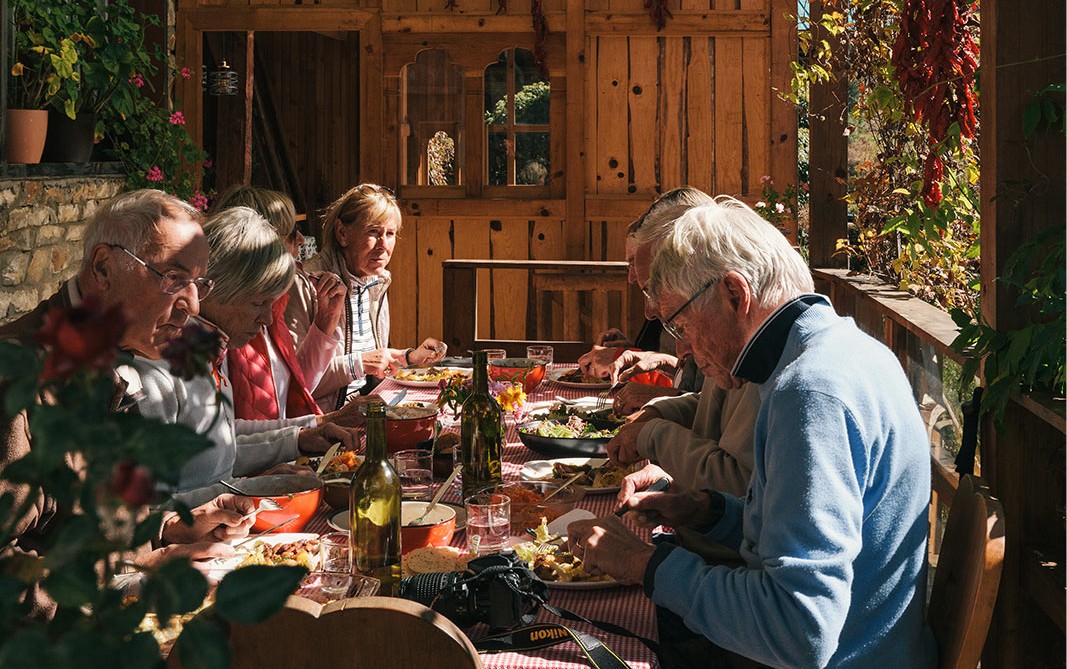
Overall, visitors agree that Bhutanese food is fresh, filling, and healthy. Those who try local meals at farmhouses often describe it as one of the most memorable parts of their trip.
Eating Experiences
With Breathe Bhutan, dining is flexible and personal. Some guests prefer international restaurants after long travel days; others enjoy traditional meals at homes and homestays. We adjust accordingly, making food a natural part of the travel experience rather than a fixed schedule. Guests also get to visit local cafés for coffee or tea breaks during their journeys — moments to unwind and enjoy Bhutan’s calm atmosphere.
Breakfast usually includes eggs, toast, porridge, fruit, and tea or coffee.
Lunch and dinner are typically rice-based, with vegetable and meat dishes, soups, and chili paste.
Snacks such as momos, biscuits, and roasted corn are common throughout the day.
Eating Customs
At local homes, it’s common to eat with your right hand, though utensils are always provided.
Washing hands before and after meals is part of Bhutanese custom.
Expressing gratitude with a smile or simple thanks is always appreciated.
Food in Bhutan is wholesome, varied, and suited to all kinds of travellers. From spicy local stews to comforting international meals, visitors will find plenty to enjoy. Whether it’s dining in a Thimphu restaurant, tasting home-cooked dishes in a farmhouse, relaxing in a café, or sharing tea in a mountain village, every meal offers a glimpse into Bhutanese life — simple, generous, and full of warmth.
At Breathe Bhutan, we believe food is not just part of the journey but an experience in itself. We listen, adapt, and make sure every meal — and every café stop — suits our guests’ tastes and mood.